Keep the promise you made to yourself
IRONMAN 70.3 Málaga · 18 October 2026
One year ago, I crossed an IRONMAN 70.3 finish line in Cascais, Portugal, after a race that did not go the way I had imagined. I crashed in T2, injured both feet, and had to run a half marathon in thirty-degree heat. I finished, but the experience stayed with me for reasons beyond the time on the clock. I knew I could complete the distance. What I wanted was another chance to find out what I could do when things went differently.
A year later, I returned to the same distance in Málaga with one clear objective: break five hours. There had been a year of training, long rides, early mornings, difficult sessions, and all the ordinary decisions that rarely make it into a race report. I had put in the work, and I wanted to see it reflected in the result. In that sense, Málaga was a kind of redemption. Not an attempt to erase Cascais, but a chance to come back better prepared and keep the promise I had made to myself.
The morning we got
The day began with a storm. Heavy rain, thunder, and an incredible amount of water coming down over Málaga. It was not the morning anyone would have chosen for an IRONMAN 70.3, but the race went ahead. After months of preparation, the day had finally arrived. The conditions were out of my hands; all I could do was adapt to them.
The swim did not go as I had expected. I was aiming for around thirty minutes, but I came out of the water in thirty-seven. It was slower than I knew I was capable of, and not the start I had wanted. Seven minutes had gone against my target before the bike had even begun. There was no point carrying that disappointment into the next discipline, though. The race was still there to be raced, and I had to make the most of what remained.
Knowing when to push
The bike was a different challenge altogether. The rain was torrential, the roads were soaked, and every corner demanded more attention than usual. I knew I had the legs to push harder, but the conditions made it difficult to know how much risk was worth taking. I settled into an effort I knew well, a little above easy, and focused on riding steadily towards the turnaround.
On the return leg, during the second 45-kilometre lap, I started to feel something strange in the rear wheel. Going through a roundabout, the back of the bike slid underneath me. I had to brake hard to stay upright, and the same sensation made me cautious through the corners that followed. I could feel time slipping away, but I was not going to risk a crash just to win back a few seconds. After what had happened in Cascais, I knew exactly how quickly a race could change.
Once I was able to settle back into the effort, I pushed a little harder. There were still legs left, and I wanted to recover some of the time I had lost. But racing well is not simply a matter of pushing as hard as possible. Sometimes it means recognising what the day allows and making the best decision you can within those limits. I could not stop the rain or make the road safer. I could choose how I responded to it.
That was the part that mattered to me. I was not going to let difficult conditions become an excuse, but I was not going to confuse commitment with recklessness either. I had come to Málaga to give everything I had, and that meant knowing when to push and when to be patient.
Whatever was left
When I reached T2, the half marathon was all that remained. The first ten kilometres went well. I was running around 4:30 per kilometre, and the pace felt comfortable. For a while, despite the slow swim and the difficult bike, I felt that I could still put together the kind of finish I had trained for.
Then, around kilometre fifteen, fatigue began to catch up with me. The pace became harder to sustain, and every kilometre required more effort. There was no extra gear waiting to appear, no hidden reserve that would make the final stretch easy. I had to work with what I had left after the swim and the bike.
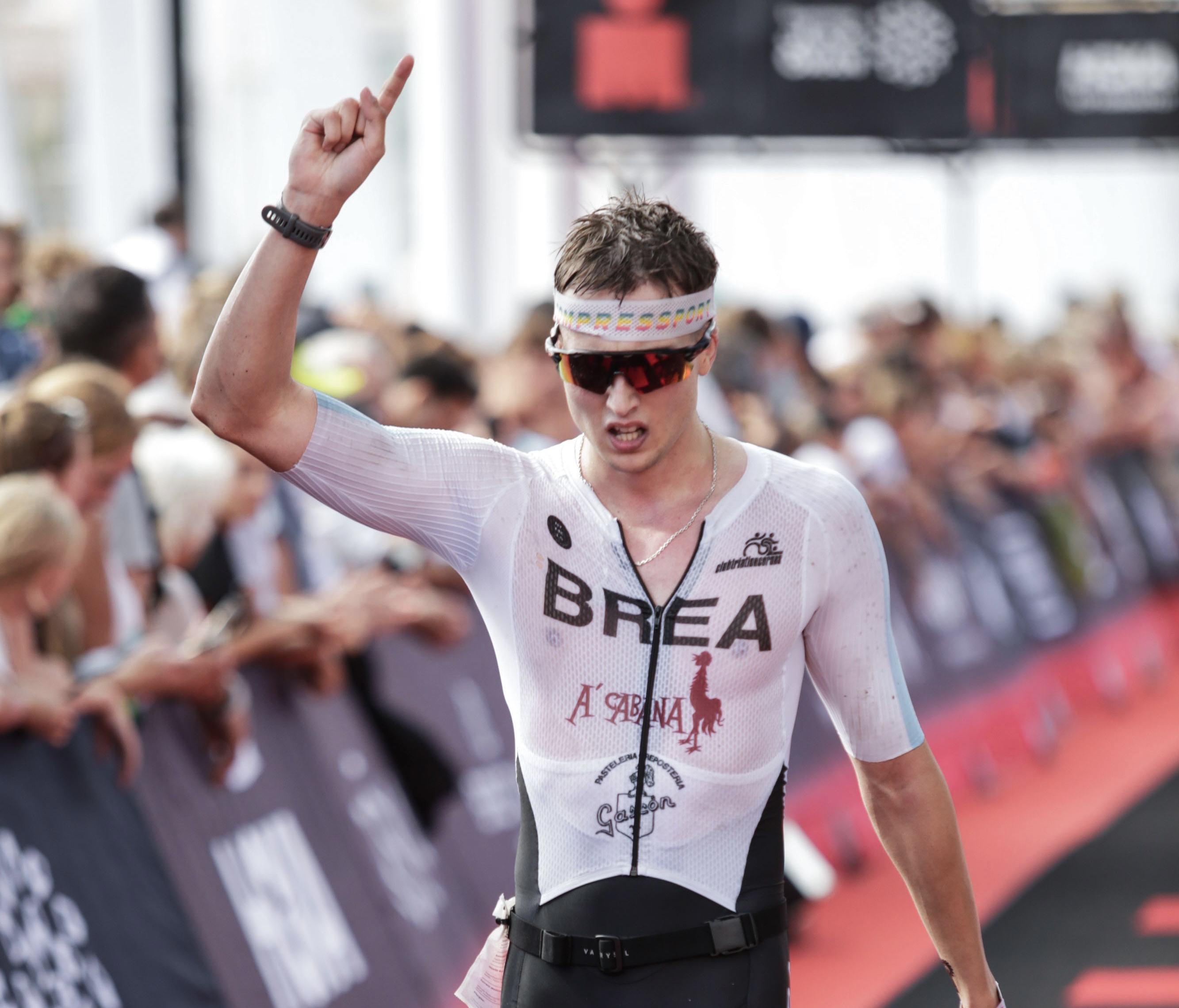
The half marathon finished in 1:40:11, a little slower than I had hoped, but it was everything I had left in me that day. I crossed the finish line in 5:03:54.
Three minutes and fifty-four seconds outside the five-hour mark.
I would be lying if I said I was not disappointed. Sub-five was the goal, and I did not get it. But I also knew that I had given the race everything I had. I had pushed when I could, stayed cautious when the conditions demanded it, and kept going when the run became difficult. I reached the finish line with the tank practically empty. There was not much more I could have asked of myself on that particular day.
Redemption is in the return
Cascais stayed with me throughout the year, but not because I needed to rewrite what happened. That race was part of my story, and so was the work that followed it. Coming back to the same distance with a different level of preparation, a clearer goal, and the willingness to give it another go was already part of making things right.
Málaga did not give me the time I wanted, but it did give me something I value: the knowledge that I can return, keep working, and give everything I have without needing the day to be perfect. The storm was not under my control. Neither were the road conditions. What I could control was my preparation, my effort, my decisions, and the way I responded when the race became difficult.
There is a difference between disappointment and regret. I can be disappointed that I missed the target without regretting the way I raced. I can want more without dismissing the work that got me here. The result matters, but it is not the only thing that matters.
The five-hour barrier is still there. I am not done with it, and I am not going to pretend that missing it by less than four minutes means the same as achieving it. There is still work to do, more to learn, and room to become a better athlete. So we keep going. We keep improving. Sooner or later, sub-five will come.
Set the standard
In another entry, I wrote about setting the standard. For me, that has never meant expecting every race to go perfectly or measuring myself only by the outcome. It means deciding what I expect from myself and then doing the work that expectation demands, especially when progress is slower than I would like.
The standard is built long before race day: in the sessions nobody sees, in the mornings when getting out of bed would be easier to postpone, in the long rides and difficult runs, and in the small decisions that seem unimportant until they accumulate into something bigger. A finish line records the result, but it cannot show all the days that made it possible to stand there.
I set the goal because I believed I could reach it. I missed it, and now I know there is more work to do. That does not change the standard. It gives me a clearer idea of what I am working towards next.
Earn your trident every day
There is a phrase I keep coming back to: earn your trident every day. Not only on race day, when the crowds are there and the result becomes something you can share, but on all the ordinary days that lead up to it. The triumph is not created in the final kilometre. It is built through the training, the patience, the sacrifices, and the decision to return after things do not go your way.
Cascais gave me a reason to come back. Málaga gave me another measure of how far I have come, and a reminder of how far I still want to go. I did not break five hours, but I kept the promise I made to myself: to prepare, to show up, and to give the race everything I had.
The clock stopped at 5:03:54. The work continues.
Set the standard. Earn your trident every day.
- A. R. Brea, written 22 Oct 2026
Cumple la promesa que te hiciste
IRONMAN 70.3 Málaga · 18 de octubre de 2026
Hace un año crucé la meta de un IRONMAN 70.3 en Cascais, Portugal, tras una carrera que no salió como había imaginado. Me caí en la T2, me lesioné los dos pies y tuve que correr una media maratón a treinta grados. Terminé, pero la experiencia se me quedó dentro por motivos que iban más allá del tiempo en el reloj. Sabía que podía completar la distancia. Lo que quería era otra oportunidad de descubrir de lo que era capaz cuando las cosas salieran de otra manera.
Un año después volví a la misma distancia en Málaga con un objetivo claro: bajar de cinco horas. Detrás había un año de entrenamiento, salidas largas en bici, madrugones, sesiones duras y todas esas decisiones cotidianas que rara vez aparecen en una crónica de carrera. Había hecho el trabajo y quería verlo reflejado en el resultado. En ese sentido, Málaga era una especie de redención. No un intento de borrar Cascais, sino la oportunidad de volver mejor preparado y cumplir la promesa que me había hecho.
La mañana que nos tocó
El día empezó con una tormenta. Lluvia intensa, truenos y una cantidad increíble de agua cayendo sobre Málaga. No era la mañana que nadie habría elegido para un IRONMAN 70.3, pero la carrera siguió adelante. Tras meses de preparación, el día por fin había llegado. Las condiciones no dependían de mí; lo único que podía hacer era adaptarme a ellas.
La natación no fue como esperaba. Apuntaba a unos treinta minutos, pero salí del agua en treinta y siete. Más lento de lo que sabía que era capaz, y no el comienzo que quería. Siete minutos en contra de mi objetivo antes de empezar siquiera la bici. Pero no tenía sentido arrastrar esa decepción a la siguiente disciplina. La carrera seguía ahí para correrla, y tenía que sacar el máximo partido a lo que quedaba.
Saber cuándo apretar
La bici fue un reto completamente distinto. La lluvia era torrencial, las carreteras estaban empapadas y cada curva exigía más atención de lo normal. Sabía que tenía piernas para apretar más, pero las condiciones hacían difícil saber cuánto riesgo merecía la pena asumir. Me asenté en un esfuerzo que conocía bien, algo por encima de suave, y me centré en rodar con regularidad hasta el giro.
A la vuelta, durante la segunda vuelta de 45 kilómetros, empecé a notar algo raro en la rueda trasera. Al pasar por una rotonda, la parte de atrás de la bici se me fue. Tuve que frenar fuerte para no caerme, y esa misma sensación me hizo ir con cautela en las curvas siguientes. Sentía cómo se me escapaba el tiempo, pero no iba a arriesgarme a una caída solo por recuperar unos segundos. Después de lo que pasó en Cascais, sabía exactamente lo rápido que puede cambiar una carrera.
Cuando pude volver a asentarme en el esfuerzo, apreté un poco más. Aún quedaban piernas, y quería recuperar parte del tiempo perdido. Pero competir bien no es simplemente apretar todo lo posible. A veces significa reconocer lo que el día permite y tomar la mejor decisión posible dentro de esos límites. No podía parar la lluvia ni hacer la carretera más segura. Sí podía elegir cómo responder.
Esa era la parte que me importaba. No iba a dejar que las condiciones difíciles se convirtieran en una excusa, pero tampoco iba a confundir compromiso con imprudencia. Había venido a Málaga a darlo todo, y eso significaba saber cuándo apretar y cuándo tener paciencia.
Lo que quedara
Al llegar a la T2, solo quedaba la media maratón. Los primeros diez kilómetros fueron bien. Iba a unos 4:30 por kilómetro y el ritmo se sentía cómodo. Durante un rato, a pesar de la natación lenta y la bici complicada, sentí que todavía podía cerrar el tipo de final para el que había entrenado.
Entonces, hacia el kilómetro quince, la fatiga empezó a alcanzarme. El ritmo se volvió más difícil de sostener y cada kilómetro exigía más esfuerzo. No había ninguna marcha extra esperando a aparecer, ninguna reserva oculta que hiciera fácil el tramo final. Tenía que trabajar con lo que me quedaba después de la natación y la bici.
La media maratón terminó en 1:40:11, algo más lenta de lo que esperaba, pero era todo lo que me quedaba dentro ese día. Crucé la meta en 5:03:54.
Tres minutos y cincuenta y cuatro segundos por encima de las cinco horas.
Mentiría si dijera que no me sentí decepcionado. Bajar de cinco era el objetivo y no lo conseguí. Pero también sabía que le había dado a la carrera todo lo que tenía. Había apretado cuando pude, había sido prudente cuando las condiciones lo exigían y había seguido cuando la carrera a pie se puso difícil. Llegué a meta con el depósito prácticamente vacío. No podría haberme exigido mucho más ese día en concreto.
La redención está en volver
Cascais me acompañó durante todo el año, pero no porque necesitara reescribir lo que pasó. Esa carrera formaba parte de mi historia, igual que el trabajo que vino después. Volver a la misma distancia con otro nivel de preparación, un objetivo más claro y las ganas de intentarlo de nuevo ya era parte de enmendar las cosas.
Málaga no me dio el tiempo que quería, pero sí me dio algo que valoro: saber que puedo volver, seguir trabajando y darlo todo sin necesitar que el día sea perfecto. La tormenta no estaba bajo mi control. Tampoco el estado de las carreteras. Lo que sí podía controlar era mi preparación, mi esfuerzo, mis decisiones y la forma en que respondí cuando la carrera se puso difícil.
Hay una diferencia entre decepción y arrepentimiento. Puedo estar decepcionado por no alcanzar el objetivo sin arrepentirme de cómo competí. Puedo querer más sin despreciar el trabajo que me ha traído hasta aquí. El resultado importa, pero no es lo único que importa.
La barrera de las cinco horas sigue ahí. No he terminado con ella, y no voy a fingir que quedarse a menos de cuatro minutos significa lo mismo que lograrlo. Todavía queda trabajo por hacer, más que aprender y margen para ser mejor atleta. Así que seguimos. Seguimos mejorando. Tarde o temprano, el sub-cinco llegará.
Marca el estándar
En otra entrada escribí sobre marcar el estándar. Para mí, eso nunca ha significado esperar que cada carrera salga perfecta ni medirme solo por el resultado. Significa decidir qué espero de mí mismo y después hacer el trabajo que esa expectativa exige, sobre todo cuando el progreso es más lento de lo que me gustaría.
El estándar se construye mucho antes del día de la carrera: en las sesiones que nadie ve, en las mañanas en que sería más fácil aplazar el levantarse, en las salidas largas y las carreras duras, y en las pequeñas decisiones que parecen poco importantes hasta que se acumulan en algo más grande. Una línea de meta registra el resultado, pero no puede mostrar todos los días que hicieron posible estar ahí.
Me puse el objetivo porque creía que podía alcanzarlo. No lo logré, y ahora sé que queda más trabajo por hacer. Eso no cambia el estándar. Me da una idea más clara de hacia dónde voy a trabajar a continuación.
Gánate tu tridente cada día
Hay una frase a la que siempre vuelvo: gánate tu tridente cada día. No solo el día de la carrera, cuando está el público y el resultado se convierte en algo que puedes compartir, sino todos los días normales que llevan hasta él. El triunfo no se crea en el último kilómetro. Se construye con el entrenamiento, la paciencia, los sacrificios y la decisión de volver cuando las cosas no salen como querías.
Cascais me dio una razón para volver. Málaga me dio otra medida de lo lejos que he llegado y un recordatorio de lo lejos que todavía quiero llegar. No bajé de cinco horas, pero cumplí la promesa que me hice: prepararme, presentarme y darle a la carrera todo lo que tenía.
El reloj se paró en 5:03:54. El trabajo continúa.
Marca el estándar. Gánate tu tridente cada día.
- A. R. Brea, escrito el 22 oct 2026
Go back