HouseKey Vault: rethinking digital trust
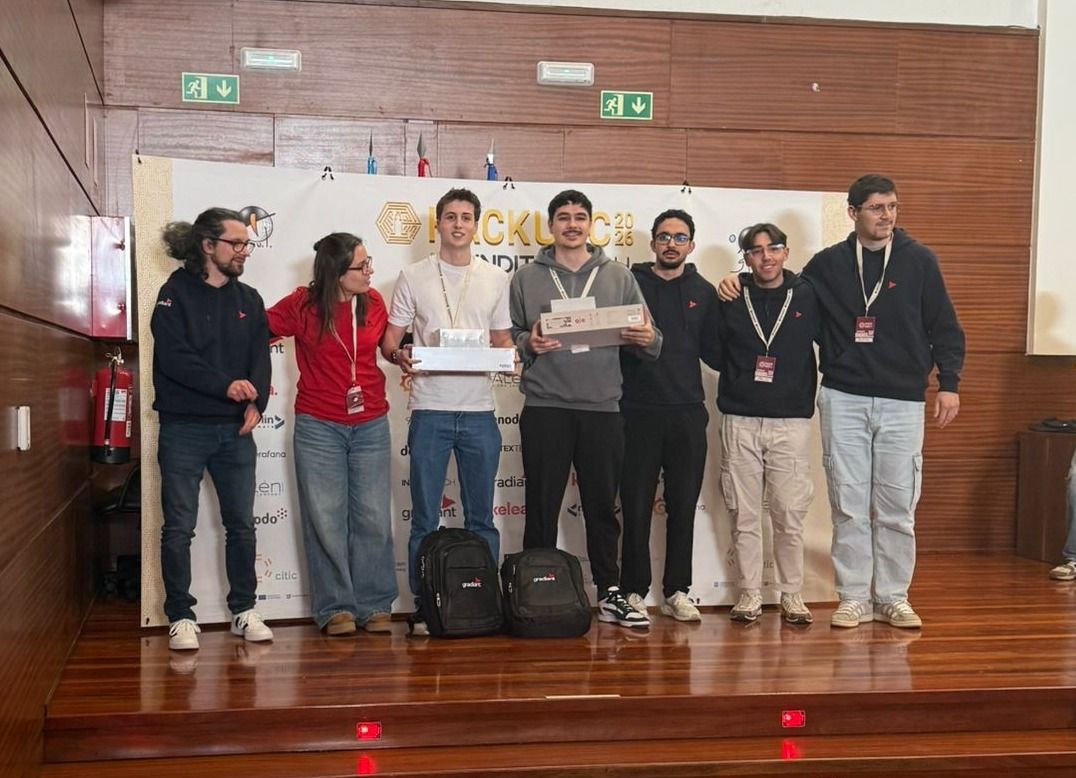
Some ideas do not start from whiteboards or diagrams. They start from habits. For years, I have carried a USB drive on my keychain. Not because I always needed it, but because “just in case” felt safer than “I hope I won’t”. At HackUDC 2026, that small object became the seed of a larger question: if I trust a physical key to protect my house, why do I trust a memorized password to protect my digital life?
HouseKey Vault was born from that thought. What if authentication was not something you remember, but something you physically hold? Not a master password. Not a shared secret. But a cryptographic identity stored in a file you control.
The problem with trust
Modern password managers promise zero-knowledge architectures, yet most still require you to derive a master secret from something you type. If that secret is weak, reused, phished, or brute-forced offline, your vault is exposed. If you forget it, you are locked out forever. The paradox is simple: we want convenience, but we inherit fragility.
The deeper issue is not encryption strength. It is where trust resides. Who holds the key material? Who can potentially reconstruct it? What assumptions are we making about the server?
A physical key as digital identity
During the hackathon, I looked at my keychain and realized something obvious. I never forget my house key. I never reuse it across houses. I never send a copy of it to a remote server and hope they protect it well. I simply carry it.
So we inverted the model. Instead of authenticating with a password, HouseKey Vault authenticates with a cryptographic key pair generated directly in the browser using the Web Crypto API. The private key is written to a .hkv file , ideally on a USB drive. The public key is stored on the server. The private key never leaves the client.
Login becomes a challenge-response flow using ECDSA P-256. the server issues a nonce. The browser signs it with the private key. The server verifies the signature against the stored public key. If valid, access is granted. If not, a lockout mechanism is triggered. No master password. No shared secret. No fallback that compromises the model.
Encryption as separation of power
Authentication alone is not enough. The vault itself must remain unreadable to the server. Every credential, folder, note, and metadata field is serialized and encrypted client-side using AES-256-GCM. The encryption key is not random; it is derived from the private key using HKDF-SHA256 with domain separation and a salt bound to the public key hash. This ensures the vault key is cryptographically scoped to this specific identity and cannot be reused elsewhere.
Each save operation generates a fresh IV. Integrity is guaranteed by GCM authentication tags. Tampering results in explicit decryption failure. A database breach yields ciphertext and initialization vectors , nothing more.
Recovery without betrayal
Physical keys can be lost. So can USB drives. The question was how to design recovery without introducing a hidden backdoor.
At registration, a 12-word seed phrase is generated using secure randomness. A secondary encrypted copy of the vault is created using a key derived from that phrase via PBKDF2 with 200,000 iterations. Only the hash of the seed is stored server-side for verification. The server cannot derive the recovery key.
If the key file disappears, the seed phrase allows the client to decrypt the recovery vault, generate a brand-new key pair, and rebind the account in a single flow. The previous key is cryptographically invalidated. Recovery restores access , not trust in the server.
Security beyond the obvious
In 48 hours we implemented more than a minimal proof of concept. Secure credential sharing via ephemeral ECDH key exchange, where the decryption key lives only in the URL fragment and never reaches the server. A duress mode that opens a decoy vault indistinguishable from the real one at database level. Second-device protection for high-sensitivity entries, requiring either a separate key file or an emergency passphrase derived via PBKDF2 with shared salt.
Breach detection uses the Have I Been Pwned k-anonymity model, sending only the first five characters of a SHA-1 hash prefix through a rate-limited proxy. TOTP codes are generated entirely in-browser using HMAC-SHA1 via Web Crypto. Every exported file carries an invisible zero-width watermark encoding an account fingerprint and timestamp for forensic traceability.
Everything runs on native cryptographic primitives. No external crypto libraries. No opaque black boxes. Explicit algorithms. Explicit threat model. Explicit tradeoffs.
The philosophy behind the build
This project was not about novelty. It was about alignment. If we say we believe in user autonomy, we must design systems that reflect that belief. If we say we value privacy, we must architect it structurally , not rhetorically.
Carrying a USB on my keychain was always a small act of preparedness. HouseKey Vault extends that instinct into the digital realm. Your identity is not something you memorize. It is something you hold. Something that does not exist on someone else’s infrastructure.
Conclusion
Hackathons compress time. They force decisions. They remove comfort. In that pressure, ideas reveal their essence. HouseKey Vault is not just a password manager; it is a reflection on trust boundaries and personal responsibility in cryptographic design. If the server is compromised, your vault remains sealed. If you lose both your key file and your seed phrase, no one can save you , and that is intentional.
True security is not about convenience. It is about clarity of ownership.
You can explore the code here and try the live demo here
- A. R. Brea, written 03 Mar 2026
HouseKey Vault: repensar la confianza digital
Algunas ideas no nacen en pizarras ni en diagramas. Nacen de hábitos. Durante años he llevado un USB en el llavero. No porque siempre lo necesitara, sino porque «por si acaso» me parecía más seguro que «espero no necesitarlo». En la HackUDC 2026, ese pequeño objeto se convirtió en la semilla de una pregunta más grande: si confío en una llave física para proteger mi casa, ¿por qué confío en una contraseña memorizada para proteger mi vida digital?
HouseKey Vault nació de esa idea. ¿Y si la autenticación no fuera algo que recuerdas, sino algo que tienes físicamente? Ni una contraseña maestra. Ni un secreto compartido. Sino una identidad criptográfica guardada en un archivo que tú controlas.
El problema de la confianza
Los gestores de contraseñas modernos prometen arquitecturas de conocimiento cero, pero la mayoría siguen exigiendo derivar un secreto maestro de algo que tecleas. Si ese secreto es débil, reutilizado, robado por phishing o descifrado por fuerza bruta offline, tu bóveda queda expuesta. Si lo olvidas, te quedas fuera para siempre. La paradoja es sencilla: queremos comodidad, pero heredamos fragilidad.
El problema de fondo no es la robustez del cifrado. Es dónde reside la confianza. ¿Quién tiene el material de la clave? ¿Quién podría reconstruirlo? ¿Qué suposiciones estamos haciendo sobre el servidor?
Una llave física como identidad digital
Durante el hackathon miré mi llavero y me di cuenta de algo obvio. Nunca olvido la llave de casa. Nunca la reutilizo para otras casas. Nunca envío una copia a un servidor remoto esperando que la protejan bien. Simplemente la llevo encima.
Así que invertimos el modelo. En lugar de autenticarse con una contraseña, HouseKey Vault se autentica con un par de claves criptográficas generado directamente en el navegador mediante la Web Crypto API. La clave privada se escribe en un archivo .hkv, idealmente en un USB. La clave pública se guarda en el servidor. La clave privada nunca sale del cliente.
El inicio de sesión se convierte en un flujo de desafío-respuesta con ECDSA P-256. El servidor emite un nonce. El navegador lo firma con la clave privada. El servidor verifica la firma con la clave pública almacenada. Si es válida, se concede el acceso. Si no, se activa un mecanismo de bloqueo. Sin contraseña maestra. Sin secreto compartido. Sin ninguna alternativa que comprometa el modelo.
El cifrado como separación de poderes
La autenticación por sí sola no basta. La propia bóveda debe seguir siendo ilegible para el servidor. Cada credencial, carpeta, nota y campo de metadatos se serializa y se cifra en el cliente con AES-256-GCM. La clave de cifrado no es aleatoria; se deriva de la clave privada mediante HKDF-SHA256 con separación de dominio y una sal ligada al hash de la clave pública. Así la clave de la bóveda queda limitada criptográficamente a esta identidad concreta y no puede reutilizarse en otro sitio.
Cada operación de guardado genera un IV nuevo. La integridad está garantizada por las etiquetas de autenticación de GCM. Cualquier manipulación provoca un fallo explícito al descifrar. Una filtración de la base de datos solo deja texto cifrado y vectores de inicialización, nada más.
Recuperación sin traición
Las llaves físicas se pueden perder. Los USB también. La pregunta era cómo diseñar la recuperación sin introducir una puerta trasera oculta.
Al registrarse, se genera una frase semilla de 12 palabras con aleatoriedad segura. Se crea una segunda copia cifrada de la bóveda con una clave derivada de esa frase mediante PBKDF2 con 200.000 iteraciones. En el servidor solo se guarda el hash de la semilla para verificarla. El servidor no puede derivar la clave de recuperación.
Si el archivo de la clave desaparece, la frase semilla permite al cliente descifrar la bóveda de recuperación, generar un par de claves completamente nuevo y volver a vincular la cuenta en un único flujo. La clave anterior queda invalidada criptográficamente. La recuperación restaura el acceso, no la confianza en el servidor.
Seguridad más allá de lo obvio
En 48 horas implementamos bastante más que una prueba de concepto mínima. Compartición segura de credenciales mediante intercambio de claves ECDH efímero, en el que la clave de descifrado vive solo en el fragmento de la URL y nunca llega al servidor. Un modo de coacción que abre una bóveda señuelo indistinguible de la real a nivel de base de datos. Protección con segundo dispositivo para las entradas más sensibles, que exige otro archivo de clave o una frase de emergencia derivada mediante PBKDF2 con sal compartida.
La detección de filtraciones usa el modelo de k-anonimato de Have I Been Pwned, enviando solo los cinco primeros caracteres del prefijo de un hash SHA-1 a través de un proxy con límite de peticiones. Los códigos TOTP se generan íntegramente en el navegador con HMAC-SHA1 mediante Web Crypto. Cada archivo exportado lleva una marca de agua invisible de ancho cero que codifica una huella de la cuenta y una marca de tiempo para la trazabilidad forense.
Todo funciona con primitivas criptográficas nativas. Sin librerías criptográficas externas. Sin cajas negras opacas. Algoritmos explícitos. Modelo de amenazas explícito. Compromisos explícitos.
La filosofía detrás del proyecto
Este proyecto no iba de novedad. Iba de coherencia. Si decimos que creemos en la autonomía del usuario, debemos diseñar sistemas que reflejen esa creencia. Si decimos que valoramos la privacidad, debemos construirla en la arquitectura, no en el discurso.
Llevar un USB en el llavero siempre fue un pequeño acto de previsión. HouseKey Vault lleva ese instinto al terreno digital. Tu identidad no es algo que memorizas. Es algo que llevas contigo. Algo que no existe en la infraestructura de otro.
Conclusión
Los hackathons comprimen el tiempo. Obligan a tomar decisiones. Eliminan la comodidad. Bajo esa presión, las ideas revelan su esencia. HouseKey Vault no es solo un gestor de contraseñas; es una reflexión sobre los límites de la confianza y la responsabilidad personal en el diseño criptográfico. Si el servidor se ve comprometido, tu bóveda sigue sellada. Si pierdes a la vez el archivo de la clave y la frase semilla, nadie puede salvarte, y es intencionado.
La verdadera seguridad no va de comodidad. Va de tener clara la propiedad.
Puedes explorar el código aquí y probar la demo en vivo aquí
- A. R. Brea, escrito el 03 mar 2026